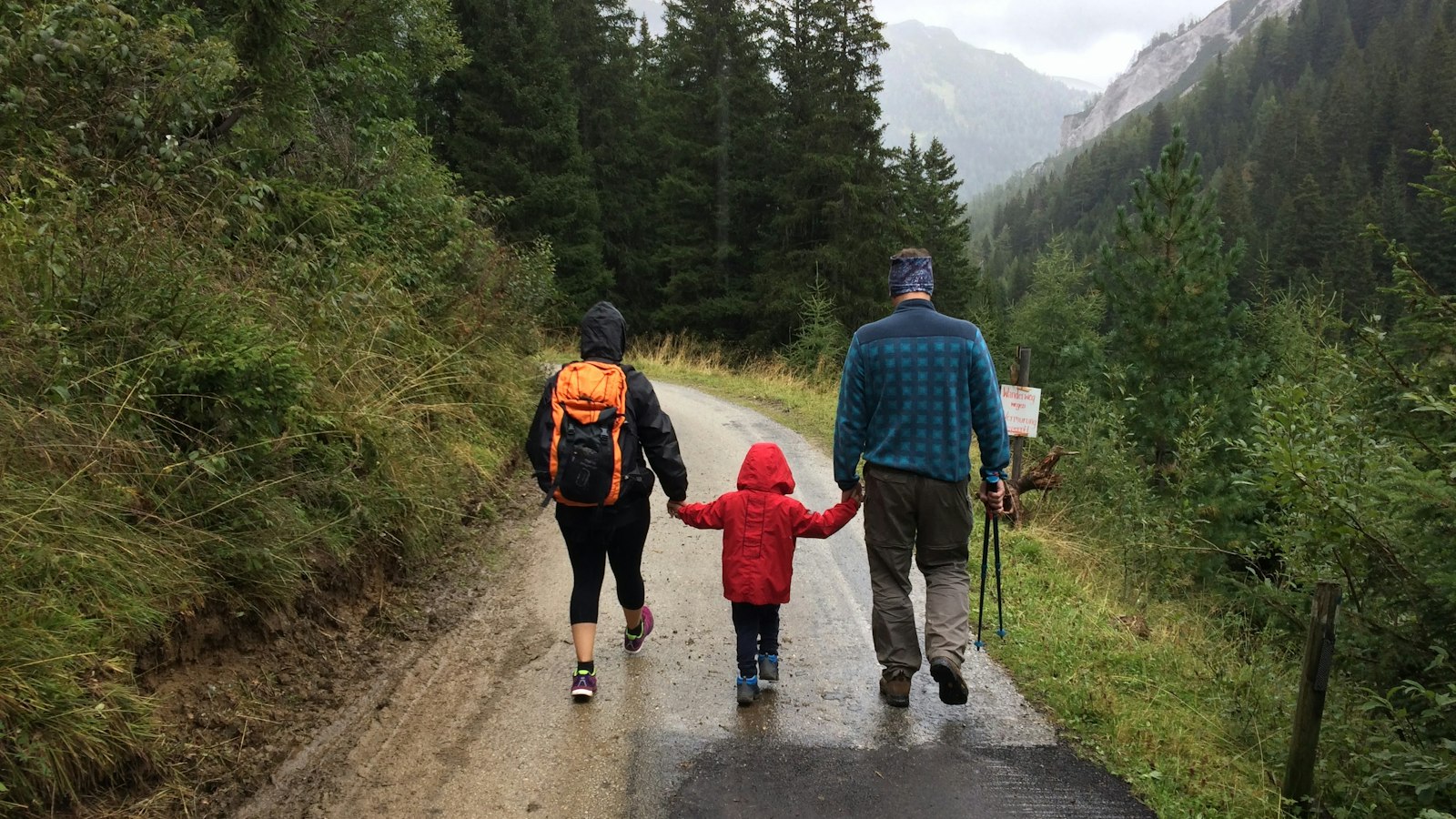
Serious incidents on family trails are rare, but the parents who handle them well are the ones who spent ten minutes talking about safety before lacing the boots. This guide covers the five risks you should actually prepare for, a short rule list even a 5-year-old can repeat, the three-blast whistle convention that helps searchers, and how to write an emergency card that is useful in the first 60 seconds. None of this replaces common sense — but it turns "what now?" into a plan.
The five risks that actually happen
You do not need to prepare for every scenario. On family trails, five categories account for almost all the incidents that turn a good afternoon into a clinic visit. The goal is not to live in fear — it is to remove the surprise.
1. Getting separated
A child runs ahead around a bend, turns a corner, and the group is suddenly out of sight. This is the most common scary moment on family trails, and it is almost always preventable with two rules: stay within sight or sound of the nearest adult, and always stop where you are if you cannot see a grown-up. Tell the child explicitly: "If you cannot see me, sit down. I will come back to you." Kids who keep walking while lost turn a 5-minute problem into a 2-hour search.
2. Roads and water
Many urban and suburban trails share space with roads, car parks, or unfenced creeks. The rule is simple: hands off the kerb, no running near water, and always hold hands at every road crossing. For toddlers, treat any open water — even a shallow drainage ditch — as a "stop and hold" zone. A child in 15 cm of moving water can slip and panic faster than an adult can react.
3. Weather shifts
Blue sky at the trailhead can become thunder 40 minutes later, especially in hills. The rule: turn around at the first sound of thunder, and get below the tree line (not on a ridge, not under a lone tall tree). Heat exhaustion and sunburn are slower but more common in summer. Our Weather Readiness Check tells you in 30 seconds whether the forecast is trail-safe for kids. The slower cousin of heat illness is dehydration — see the Hydration Calculator for the per-kid amount by age and temperature.
4. Plants and animals
Realistic threats in family-use areas are mostly: ticks, poison ivy / oak, bee wasp and hornet stings, and on rare trails, snakes. Bears, big cats and boar are not a city-park problem, but if you hike in rural or mountain areas read our Wildlife Encounter Guide. The daily habit: do a tick check on every child (scalp, armpits, groin, behind knees) within 2 hours of getting home — the Tick Check Guide walks through it. Teach kids to never grab an insect or a snake they do not recognise, and to wash hands before eating.
5. Exhaustion and "bonking"
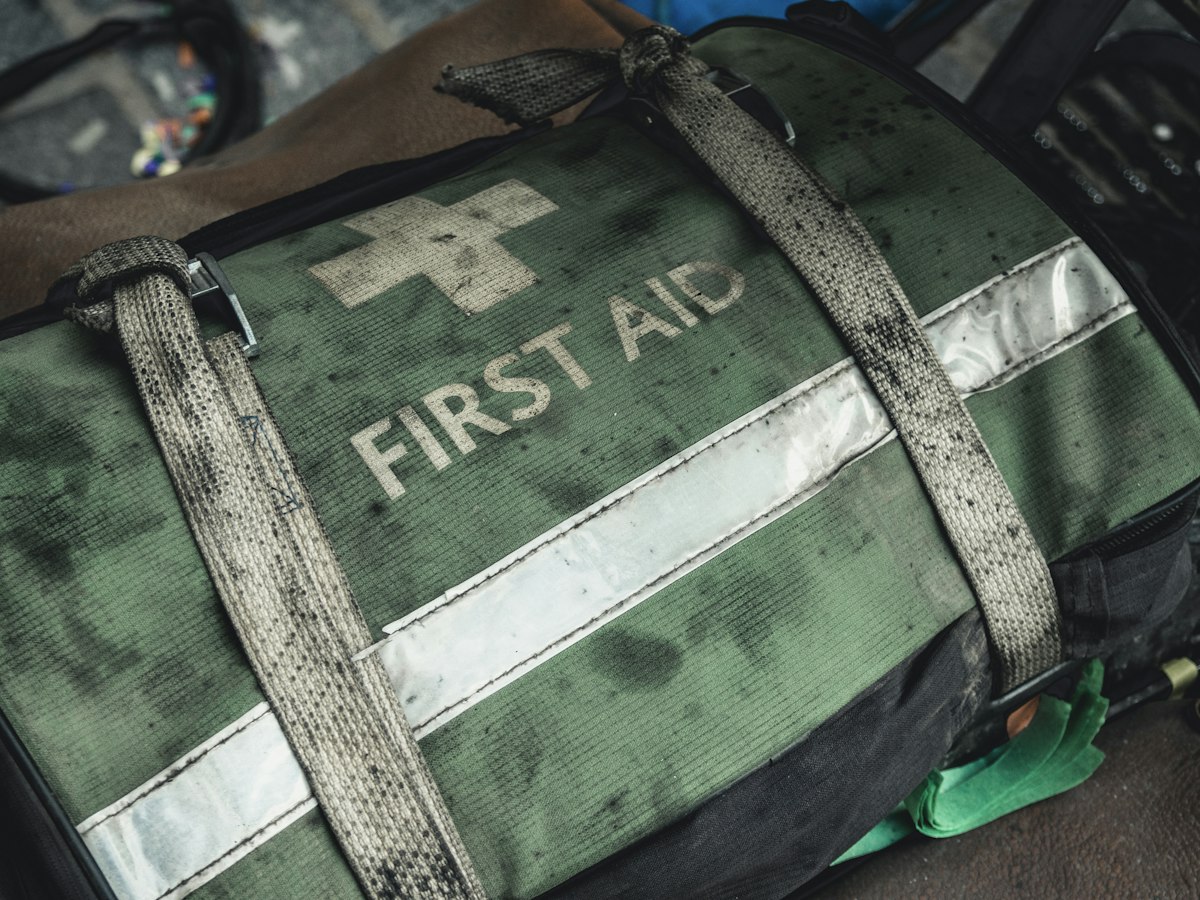
Tired children stop being cute at kilometre 2. The pattern: grumbling, slower pace, then a meltdown about trivial things. The fix is upstream: snack before they are hungry (every 30–40 minutes), water before they are thirsty, and turn back before they are "done". Experienced parents keep a small energy bar in the pocket for the wall between lunch and the car. If something actually happens — a cut, a twist, a splinter — our First Aid Decision Guide walks you through what to treat on the spot and what needs a clinic.
The kid-safe rule list (short enough to memorise)
Long lists do not work on children. Five rules, repeated on the car ride, are enough. Make them say them back to you.
- Stop if you cannot see a grown-up. Sit down. Blow the whistle three times.
- No trail snacks. Only eat food that came from our bag.
- No touching plants, bugs, or animals you do not know.
- Hold hands at roads and near water. No running ahead on bends.
- Tell a grown-up before you need the toilet, before you are tired, before it rains.
The three-blast whistle convention
A whistle is louder than a voice, cuts through wind and trees, and every child can hold one. The international convention for lost-person signals is three short blasts, repeated, with pauses. Teach your child: three blasts = I need help; one blast = OK, I am here; two blasts = come here. Agree on the reply signal (two long blasts from you) so they know you heard them.
Two practical notes. A cheap pea-less whistle works in cold weather; pea whistles freeze. Buy two — one per child, on a lanyard around the neck, not in a pocket. And tell them clearly: a whistle is only for getting lost or hurt, not for games. A child who blows it for fun teaches every adult within hearing to ignore it, which is exactly the habit you do not want on the day it matters.
Writing an emergency contact card
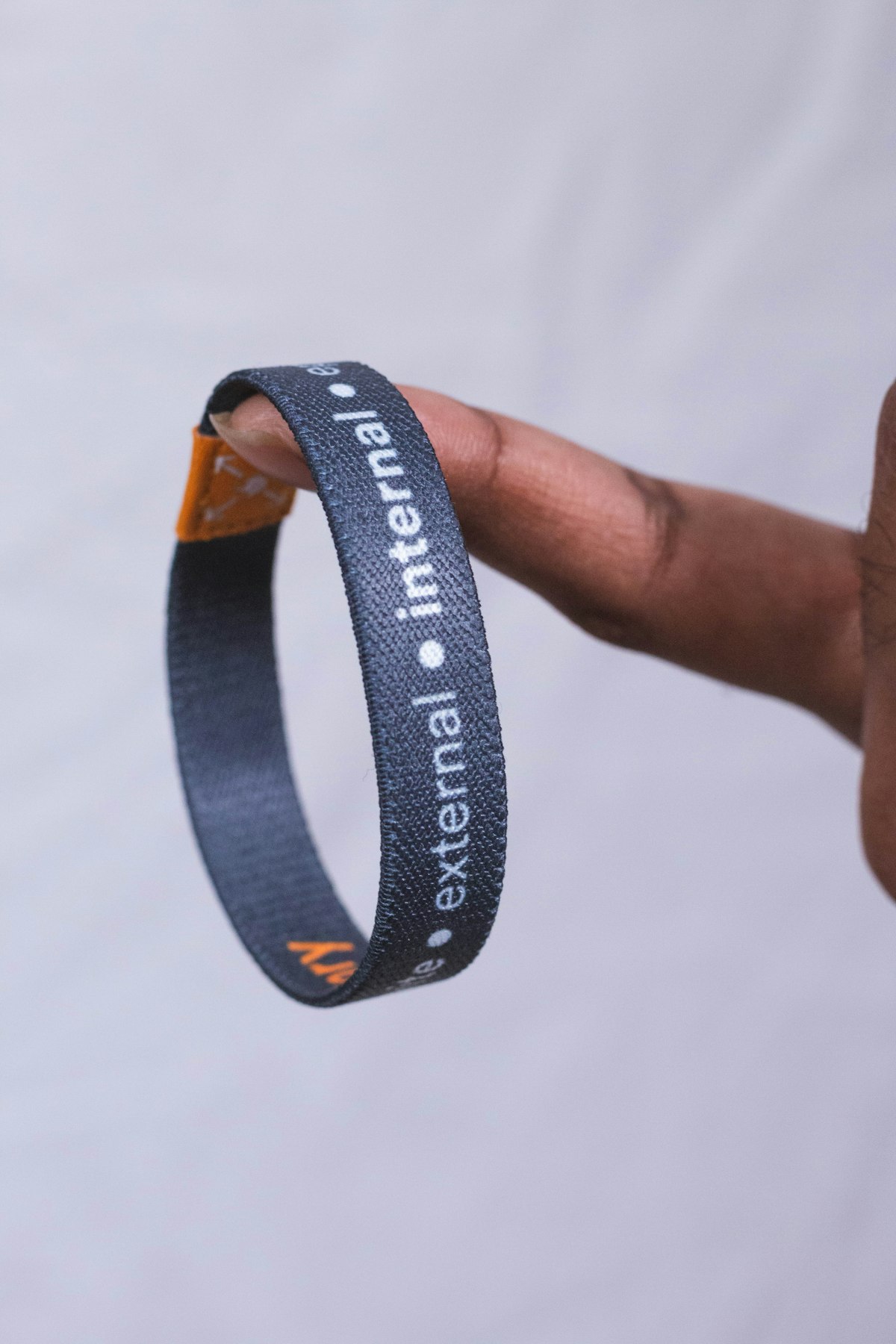
If your child is ever found by a stranger or is taken to a clinic dazed, the first 60 seconds of information matter. A small card in a pocket (or, better, a wristband) should contain, in this order:
| Field | What to write | Why it matters |
|---|---|---|
| Child's first name + age | First name and approximate age, not full address. | Builds trust; keeps privacy. |
| Parent phone numbers | Two numbers, on the card and on the wristband. | One phone may be dead or out of signal. |
| Allergies | "Penicillin allergy" / "nuts" / "none". | Clinics ask this first. |
| Medication | Asthma inhaler? Epinephrine? Where it is kept. | Actionable in under a minute. |
| "Please call — I am not lost" | A short line, in the local language and English if abroad. | Tells a helper what to do. |
| Trail / meeting point | Write the trail name and car park on the back in pencil. | You can update it per outing. |
We built a printable Kid Emergency ID Card that walks through exactly these fields and prints on one card — keep one in the pack and write the trail name on the back before you drive.
Safety is not about making the trail less fun. It is about removing the ten small panics that make parents stop going. A child who knows the rules is a child who gets to go more often.
Run through the rules on the way there, pack the whistle and the card, and let the kids walk. You have now done the ten minutes that most families skip — and you are already more prepared than 90% of the car park.