Almost every family hike ends without a single animal sighting beyond a squirrel. That is good news, not a disappointment: it means the prevention habits below are working. The few times you do meet something with claws, tusks or fangs, the outcome is decided by what you do in the next ten seconds — and by what the children do. This regional field guide covers the animals families actually encounter, what to do, what never to do, and how to talk to kids about it without turning the woods into a nightmare.
The right mindset: most encounters end quietly
Wild animals hear you long before you see them. A family group that talks, sings and laughs as it walks is usually avoided by deer, boars and bears — these animals do not want an encounter any more than you do. The dangerous situations tend to share three patterns: surprising an animal at close range (around a blind corner, after a bend in the trail), getting between an animal and its food or young, or approaching to take a photo. With children in the group, your job is to remove all three patterns before they happen, not to hero-react after.
If you would rather have the step-by-step on your phone offline, our Wildlife Encounter Guide walks you through each animal type with a "what you see → what you do" decision flow. Read it once at home, save the page, and you will not be guessing when it counts.
Regional quick-reference table
The single most useful thing you can do before a trip is learn which animals actually live where you are hiking. Advice for a bear in Canada does not apply to a macaque in Japan. This table is a starting point — always check the local park or forest authority's current guidance, especially after a hot, dry spell when food is scarce.
| Region | Animal | Typical trigger | What to do |
|---|---|---|---|
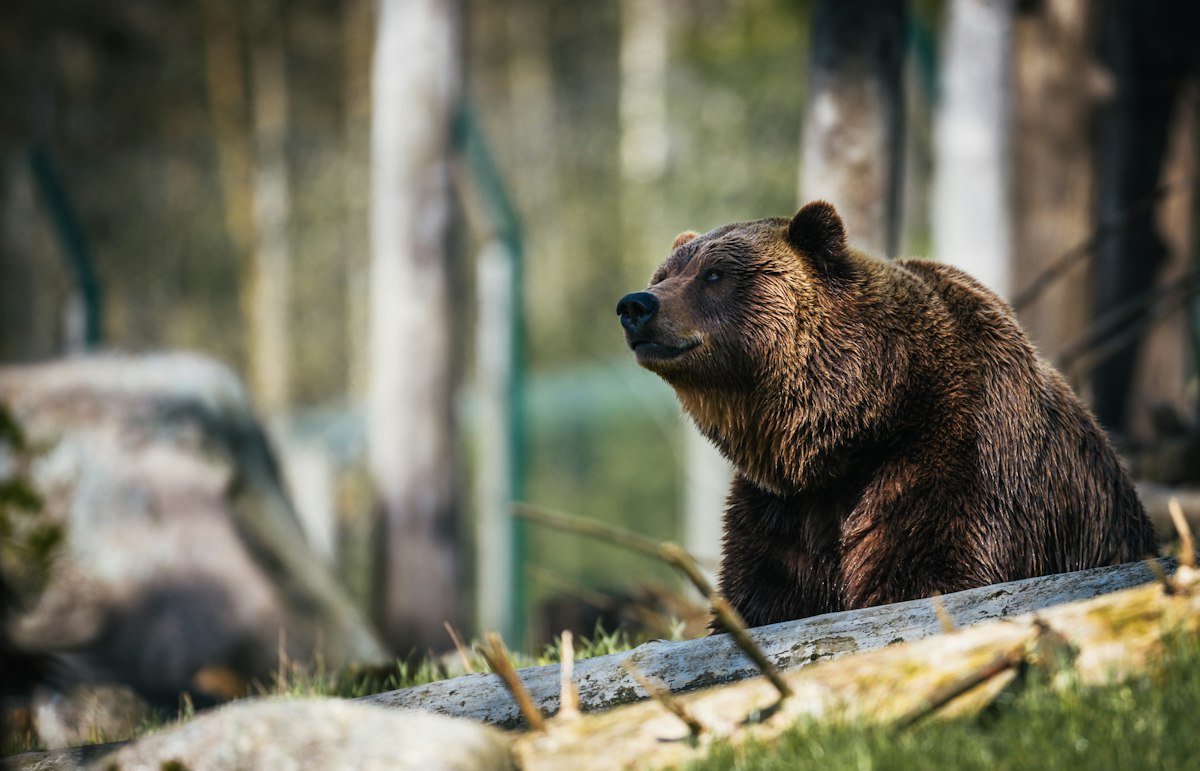
| North America | Black bear / grizzly | Surprise encounter, food smell, with cubs. | Stand your ground, back away slowly, talk calmly. Do not run. Group children together in front of you. Play dead only for a grizzly defensive attack; fight back hard if a black bear makes contact. |
| North America | Cougar / mountain lion | Dawn or dusk; children running ahead alone. | Make yourself big, raise arms, make noise. Do not crouch or turn your back. Pick children up. Fight back if attacked. |
| Europe | Wild boar | Sows with piglets; surprising them at close range. | Give a wide berth (50 m+). Back away diagonally. Climb a tree or onto a rock if charged. Boars rarely chase far. |
| East / South Asia | Macaques / monkeys | Food visible, phones held out, eye contact, selfie attempts. | Do not feed them. Keep snacks and phones zipped inside a pack. Stay calm, do not stare, walk on. Do not corner them. |
| East / South Asia & Europe | Wild boar | Same triggers as European boars; more common near rural trailheads. | Same response: wide berth, back away, protect children behind you. |
| Global | Snakes (vipers, etc.) | Stepping over logs or reaching into tall grass. | Stay on the trail. Wear closed shoes and long pants. Step onto logs, not over them. If bitten, keep the child calm and still, and seek medical help immediately. |
Every one of these rows is a simplification. That is intentional: in a real encounter you have seconds, not minutes, and a one-line memory aid beats a forgotten lecture. For the full detail, the regional park websites and ranger stations are the authoritative source.
Do and don't, in one place
When the moment comes, you will not remember this article. You will remember a short list. So here is the short list:
Do
- Make noise as you walk — talk, sing, or use a bell; announce yourself around blind corners.
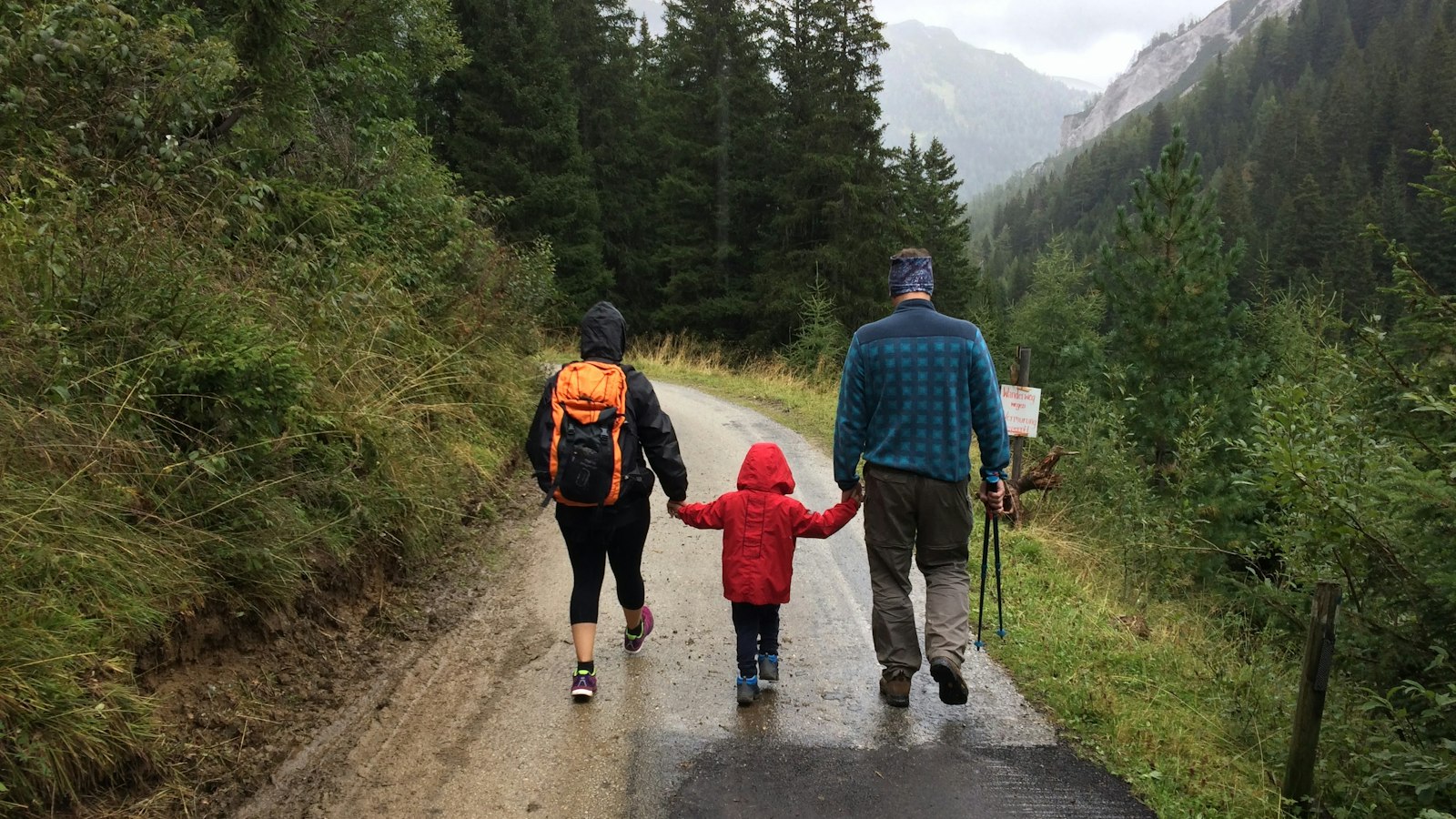
- Keep children in the middle of the group, between the adults, never out of sight.
- Back away slowly while keeping the animal in view and talking in a calm, low voice.
- Give animals at least 50 m of space, more for anything with young.
- Carry out everything you carried in — including apple cores and banana peels.
Don't
- Don't run or scream. Running triggers a chase instinct in predators and startles prey into bolting unpredictably. Teach children to stand still.
- Don't feed wildlife, not even "just one cracker". Fed animals lose their fear of humans and become nuisance animals — which usually ends badly for them.
- Don't approach for photos, and don't let children run ahead "just around this corner".
- Don't keep snacks or smelly items in the tent or on the picnic blanket where they invite attention.
- Don't rely on a bell alone in dense, wind- or water-noise-covered terrain; talk louder instead.
Prevention: garbage, bells, timing
The best encounter is the one that never happens. Three habits prevent the large majority of problems:
- Smell control. Food wrappers, used wipes, fruit peels and even scented lip balm smell to a bear like a dinner bell. Use sealed bags, and carry out all scraps. At campsites, store food in the provided bear box or hang it well away from tents — not in the vestibule.
- Timing. Many predators and boars are most active at dawn and dusk. With young children, plan trail time between roughly 9 a.m. and 5 p.m. — which also fits nap schedules and avoids the hottest hours.
- Group noise. A family that chats as it walks announces itself. Bear bells help on quiet, winding trails, but they are not a substitute for talking, and some experts consider them only modestly effective. Use them as a bonus, not a strategy.
After a hot, dry season, food is scarce and animals range closer to trails and people. If you are visiting such an area, double the distance you keep and check the park's latest notices. Pair this with a look at the Weather Readiness Check, because the same hot, dry conditions that stress wildlife also make heat and thunder decisions harder.
How children should behave
This is the part that decides real outcomes. Children are small, make high sounds, and look like prey to a cougar — which is exactly why they must not run or scream if an animal appears. Practise it at home, as a game, long before the trail:
- "If we see an animal, I stand still like a tree." (Show them: feet apart, arms at sides, quiet.)
- "I do not run, even if I am scared. Running makes animals want to chase."
- "I stay next to Mum or Dad, and we back up together, slowly."
- "I never approach, even if it looks cute."
For a lost-child scenario, the same rule applies: hug a tree, stay put, blow the whistle three times. Before every trip, agree on a meeting point at the trailhead and at every junction. Build this into a written Family Emergency Plan so every adult on the trip — grandma, the babysitter, the friend who came along — knows the same rules.
Wild animals are not looking for a fight. They are looking for food, their young, and a quiet life. Give them all three, and the encounter ends before it starts.
Read once, pack light, make noise, and keep the kids in the middle. The woods are safer than the parking lot — as long as you remember which rules matter.